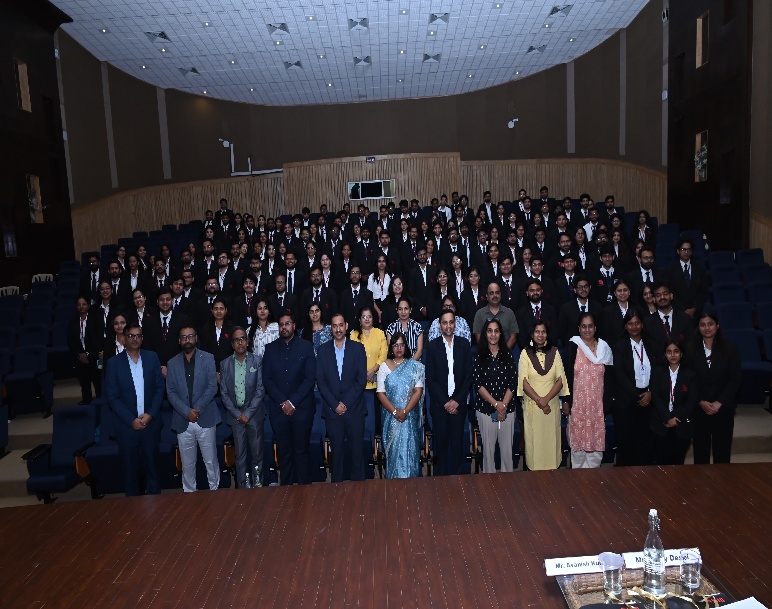



Enecon 2025
SIIB, Auditorium | 18 February 2026 | 10:00 A.M – 01:00 P.M
Batch (2024-26 & 2025-27) | Participants – 100+
Speakers:
- Mr PK Verma, Global Sustainability Portfolio Manager, Henkel Adhesive Technologies,
- Mr Avinash Kumar, SAP Practice Head, Tech Mahindra
- Mr Amey Desai, Customer Sustainability Partner, A.P. Moller-Maersk A/S,
- Mr Vinay Kumar, Associate Director – ESG, KPMG India
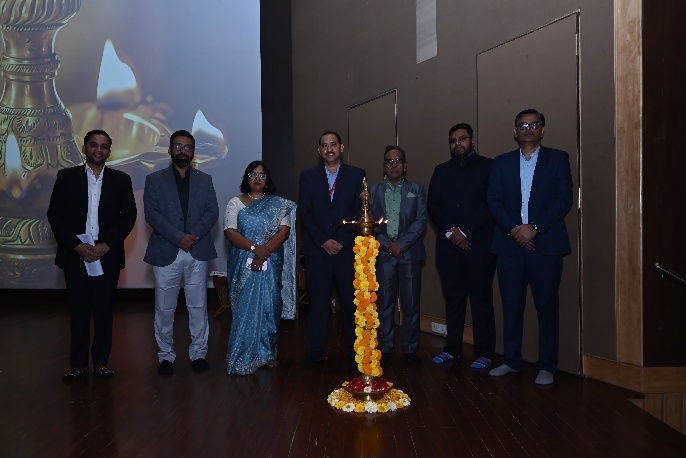
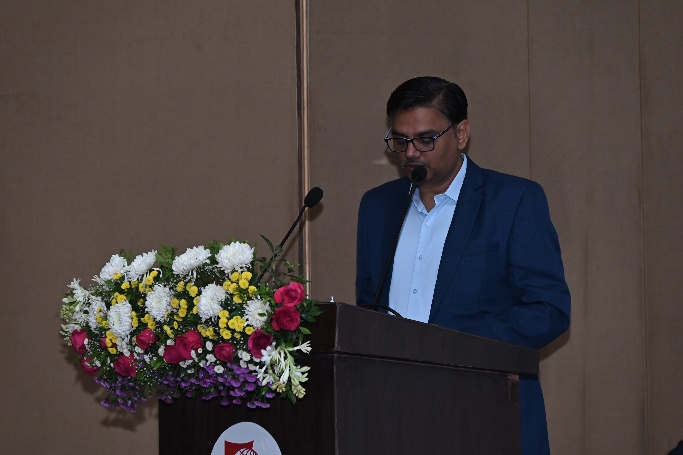
ENECON 2025, the flagship sustainability conclave of the Department of Sustainability Management at SIIB, Pune, commenced with the ceremonial lamp lighting and opening formalities. The event featured an address by Dr Alka Maurya, Director, SIIB, who emphasised the importance of transforming sustainability intent into measurable impact. She highlighted the urgency of climate action, the shared responsibility of governments, corporations, and individuals, and the role of leadership in driving meaningful environmental and societal change. The conclave also marked the official launch of the Department of Sustainability Management’s newsletter, Equilibria, unveiled by the esteemed panellists, showcasing student-led sustainability research and thought leadership.
This was followed by a thematic address by Dr Ravi Sharma, Head of the Department of Sustainability Management, who elaborated on the conclave theme, “Leadership and Sustainability Unbound: From Intent to Impact.” He explained that while many organisations express intent toward sustainability, authentic leadership lies in breaking traditional boundaries (“unbound”) and translating commitments into measurable operational impact. He emphasised that sustainability must move beyond boardroom discussions into core business functions, supported by systems thinking, governance, data-driven decision-making, and leadership accountability to create tangible, long-term value.
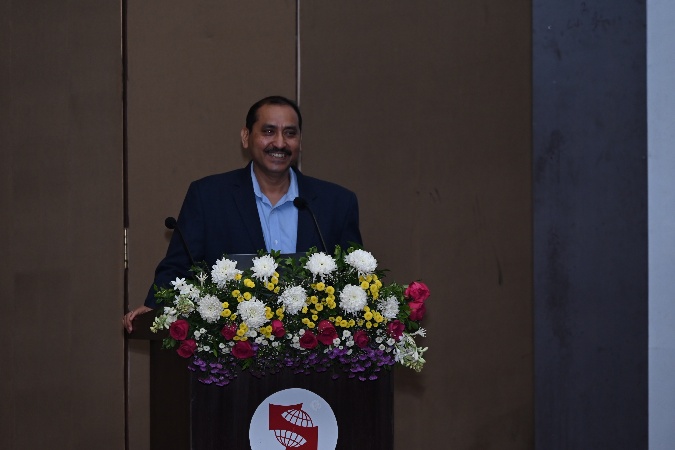
The first expert session was delivered by Mr Amey Desai, Customer Sustainability Partner, A.P. Moller–Maersk, who discussed the decarbonisation of global logistics. He highlighted the scale of logistics emissions, the dominance of Scope 3 emissions, and the importance of carbon accounting, alternative fuels such as green methanol, and digital transparency. He emphasised that decarbonisation requires ecosystem-wide collaboration and represents both an environmental responsibility and a strategic business opportunity.
The second session was delivered by Mr P.K. Verma, Global Sustainability Manager, Henkel Adhesives, who focused on lifecycle-based sustainability in manufacturing. He explained how product design, material selection, and circular-economy principles influence environmental impact throughout the lifecycle. He highlighted the role of advanced adhesive technologies in improving durability, reducing emissions, and enabling recyclability, demonstrating how sustainability is embedded into engineering and product innovation.
The third session was conducted by Mr Avanish Kumar, SAP Practice Head at Tech Mahindra, who spoke about integrating sustainability into enterprise operations through digital systems. He emphasised the role of ERP platforms, carbon accounting, and AI-driven analytics in enabling organisations to track, measure, and improve sustainability performance. He explained that sustainability transformation requires embedding ESG metrics into everyday operational workflows rather than treating them as standalone reporting functions.
The final session was delivered by Mr Vinay Kumar, Associate Director – ESG, KPMG India, who highlighted the evolution of ESG from voluntary reporting to a core component of corporate strategy and financial decision-making. He discussed the role of regulatory frameworks, investor expectations, and governance systems in driving ESG adoption, emphasising the need for measurable performance, transparency, and leadership commitment to bridge the gap between intent and impact.
The conclave concluded with an engaging Q&A session, during which students interacted with the speakers on topics including decarbonisation pathways, circular-economy challenges, supply-chain sustainability, ESG implementation, and governance structures. The event concluded with the Vote of Thanks delivered by Dr Dipen Paul, Deputy Director, SIIB, who summarised the key learnings and reiterated the importance of leadership, collaboration, and operational integration in advancing sustainability.
ENECON 2025 reinforced that sustainability leadership requires moving beyond intent toward measurable action, supported by innovation, digital integration, lifecycle thinking, and strong governance to create lasting environmental and business impact.
Key Takeaways
“The sessions highlighted how sustainability must move beyond intent and be embedded into business systems through measurable actions, digital integration, and leadership accountability.”
- K. Aryaman Kashyap (MBA–SM 2025–27)
“The discussion on lifecycle sustainability and supply chain decarbonisation helped me understand how infrastructure, materials, and logistics play a critical role in achieving long-term environmental and economic resilience.”
- Krishnadutt Shrimali (MBA–AB 2025–27)
“The insights on ESG as a strategic and financial imperative broadened my perspective on how sustainability influences corporate competitiveness, stakeholder trust, and global market access.”
- Aditi Verma (MBA–IB 2025–27)
Photos: